
Solar Net Metering in Telangana 2026: Process, Documents, Charges & Approval Timeline
By Rengy Editorial Team
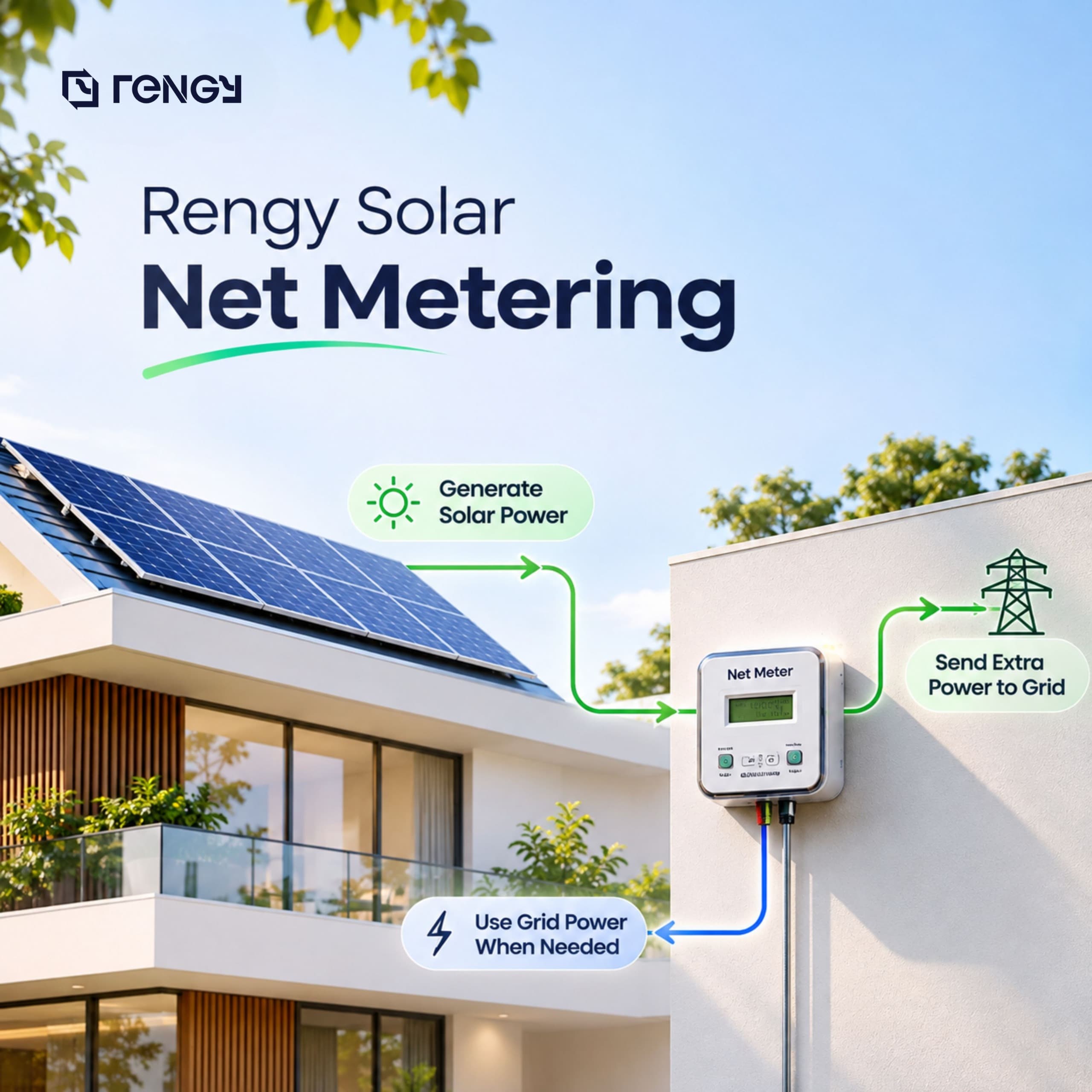
Thinking of installing rooftop solar at your home in Hyderabad or elsewhere in Telangana? One important step is connecting the solar system to the electricity grid through the applicable metering arrangement. For many homes, this is net metering.
Net metering records electricity flowing in both directions. Your home uses solar power when it is available. If your system produces more electricity than your home needs, eligible surplus can flow to the grid. When solar generation is low, your home can draw electricity from the grid. The utility meter records import and export so the bill can be calculated under the applicable rules.
This guide explains the Telangana process using the Telangana Electricity Regulatory Commission (TGERC) Rooftop Solar PV Grid Interactive Systems Regulation, 2025, notified on 15 November 2025, and current TGSPDCL guidance available for applicants. Requirements may differ by consumer category, system size, local utility and any subsequent regulatory update.
What is solar net metering?
Net metering is a billing arrangement for an eligible grid-connected rooftop solar system. During a billing period, electricity imported from the grid is set off against eligible electricity exported to the grid, subject to the applicable regulations and billing rules.
- Daytime: Solar power is used by appliances in your home first.
- Surplus generation: Eligible excess power is exported through the grid connection.
- Evening or low-sunlight hours: Your home draws electricity from the grid when needed.
- Billing: The utility accounts for import and export under the applicable net-metering rules. Fixed charges, minimum charges, taxes or other bill components may still apply.
Net metering is not the same as an off-grid battery system. A standard grid-connected inverter generally shuts down during a grid outage for safety unless the system is specifically designed with approved backup functionality.
Who can apply for net metering in Telangana?
Under the 2025 TGERC regulation, eligible consumers other than temporary-supply consumers may apply for rooftop solar under net metering, subject to the rules, technical feasibility and available distribution-transformer or feeder capacity. The regulation provides for net-metering systems up to 500 kWp, while capacity at an individual premises is also constrained by sanctioned load and consumer category.
- Residential and government consumers: Rooftop solar capacity may be up to 100% of sanctioned load, subject to technical feasibility and the regulation.
- Industrial, commercial and other consumers: Capacity may be up to 80% of sanctioned load or contracted demand, subject to the regulation.
- Minimum system size: The 2025 regulation specifies 1 kWp as the minimum for net metering.
- Pending utility arrears: Consumers with pending arrears are not eligible until the relevant issue is resolved.
- Temporary supply: Temporary-supply consumers are excluded under the stated eligibility provisions.
Older TGSPDCL FAQ pages may show different maximum capacity figures because they reflect earlier rules. For a new application in 2026, check the 2025 regulation and the current portal rather than relying on an older page alone.
TGSPDCL net metering process: step by step
- Check your electricity service details. Keep your Unique Service Number (USN), consumer category, sanctioned load and latest bill ready. Confirm whether your service is eligible and whether the proposed solar capacity fits the sanctioned load.
- Plan the rooftop system. A site survey should review roof area, shade, structure, wiring route, inverter location and your electricity usage. The system design should comply with applicable technical and safety requirements.
- Register the solar net-meter application. Use the current TGSPDCL solar registration portal and enter the service details requested. The portal asks whether you intend to avail PM Surya Ghar subsidy/CFA. Use the National Portal process for subsidy where applicable.
- Submit the application fee and required information. Save the registration or acknowledgement number. It is useful for tracking and follow-up.
- Wait for document scrutiny and feasibility. The distribution licensee checks whether the application is complete and whether the grid connection is technically feasible, including the relevant distribution transformer or feeder capacity.
- Proceed with installation only in line with the approval and applicable scheme rules. Use a qualified installer and equipment meeting the relevant technical standards. Do not treat a submitted application as permission to connect the system.
- Submit completion information and arrange inspection/testing. Follow TGSPDCL instructions for the work completion report, safety documentation and any required inspection or certification.
- Complete meter installation and commissioning. The utility arranges the applicable bi-directional meter and connection formalities. The system should operate in parallel with the grid only after required approvals and commissioning steps are complete.
Documents to keep ready
Document requirements can vary by application type and current portal workflow. The official TGSPDCL guidance and the TGERC application checklist identify the following items or information as relevant:
- Copy of the latest electricity bill, showing the service connection details.
- Proof of payment of the applicable processing fee.
- Applicant/consumer details and a working mobile number for OTP or utility communication.
- Bank account proof/details where requested in the prescribed application or for settlement of eligible credits.
- Two self-addressed stamped envelopes where required by the applicable offline checklist.
- Prescribed application form and consumer declaration.
- After installation, the work completion report and connection agreement in the format required by the utility.
- Any additional technical, safety, ownership/authorization or site documents requested for the specific service or system.
Do not assume every item on an older offline checklist is required for every online application. Review the live TGSPDCL portal and the form generated for your application before submitting.
Net metering charges in Telangana (2026)
The TGERC Rooftop Solar PV Grid Interactive Systems Regulation, 2025 specifies the following application processing fee per connection:
| Consumer connection | Processing fee |
|---|---|
| LT consumers | ₹2,500 |
| HT consumers | ₹15,000 |
These are processing fees stated in the regulation. They should not be described as the total cost of net metering or the total cost of a rooftop solar installation. The final project may also involve solar equipment and installation costs, meter-related arrangements, utility-required work, taxes or other charges applicable to the particular consumer and project.
For a residential household with an LT connection, ₹2,500 is the published processing-fee figure under the 2025 regulation. Confirm the amount and payment route shown by TGSPDCL when applying, because the live portal and any later orders govern the actual submission.
How long does TGSPDCL approval take?
The 2025 TGERC regulation provides specific service timelines for the application review stage:
| Stage | Regulatory timeline |
|---|---|
| Written notice confirming required documents or listing deficiencies | Within 7 working days of receiving the application |
| Feasibility assessment and communication | Within 15 working days from receipt of a proper application |
| Feasibility validity | 4 months, unless extended by the distribution licensee |
Important: These are timelines for the specified review and feasibility steps, not a promise that the entire project will be commissioned within 22 working days. Installation, completion-document review, inspection/testing, meter availability, consumer corrections and local network constraints can affect the end-to-end schedule. If the application is incomplete, the process may take longer.
What happens during net-meter installation?
A conventional one-way energy meter does not record both grid import and solar export in the way required for net metering. TGSPDCL guidance describes a separate bi-directional meter arrangement, with the existing meter replaced as applicable. The utility determines the meter rating and connection requirements based on the sanctioned load/contract demand and applicable technical standards.
The installer and consumer should coordinate with the utility rather than independently altering the service meter or connecting the solar system to the grid. Metering and commissioning should follow the approved procedure.
How does the electricity bill work after net metering?
In a net-metering arrangement, the bill reflects energy imported from and exported to the grid according to the applicable billing rules. If the net result is import, the consumer pays the applicable tariff and other bill components. If eligible export exceeds import, credits and their adjustment or settlement are handled under the current regulation and utility billing procedure.
Do not assume every exported unit becomes a cash payment at the retail tariff. Credit carry-forward, settlement periods, payable rates and minimum or fixed bill components are governed by the applicable rules and tariff orders. Check the latest bill and utility terms for your consumer category.
Common reasons an application may be delayed
- Incorrect service number or mismatch between the application and electricity bill.
- Missing documents, incomplete declarations or unpaid processing fee.
- Proposed solar capacity exceeding the applicable sanctioned-load limit.
- Insufficient distribution transformer or feeder capacity at the proposed interconnection point.
- Pending electricity arrears or a service category that is not eligible.
- Installation or completion documents that need correction.
- Inspection, safety certification or meter installation coordination still pending.
Net metering and PM Surya Ghar subsidy: are they the same?
No. Net metering is a grid-billing and connection arrangement. PM Surya Ghar is a central rooftop solar scheme that may provide financial assistance to eligible residential consumers through its prescribed application and vendor process. A consumer may need to complete both the utility connection process and the subsidy-related steps. Approval of one should not be treated as automatic approval of the other.
TGSPDCL's registration portal directs applicants toward the National Portal for rooftop solar subsidy/CFA. Confirm current eligibility, registered-vendor requirements, commissioning documentation and subsidy status through the official scheme portal.
Planning the system size and budget? Read our related guide: 3kW Solar System Price in Hyderabad 2026: Cost, Subsidy, Savings & Installation Guide.
How Rengy can help with the solar journey
Rengy supports residential solar projects with system design, verified installation partners, project execution and assistance with net-metering documentation and approvals. The exact utility decision, inspection schedule, meter installation and subsidy outcome remain subject to the applicable rules and the relevant authorities.
Before choosing a system, review your electricity usage, sanctioned load, rooftop conditions and the expected project cost. A properly planned system can help make the approval and installation journey more organized.
Explore Rengy or read more solar guides on the Rengy blog.
Official references
- TGERC Rooftop Solar PV Grid Interactive Systems Regulation, 2025.
- TGSPDCL Solar FAQs.
- TGSPDCL Solar Net Meter Registration portal.
- TGREDCO rooftop solar net-metering guidelines (legacy guidance; verify against the 2025 regulation).
Editorial note: This article is general information, not a utility approval or legal opinion. Regulations, portal steps, fees and technical requirements may change. Confirm the current requirements with TGSPDCL/TGERC before applying.
Frequently Asked Questions
Want to Know the Exact Cost for Your Home?
Get a free, personalized solar design and quote based on your rooftop and electricity usage.